

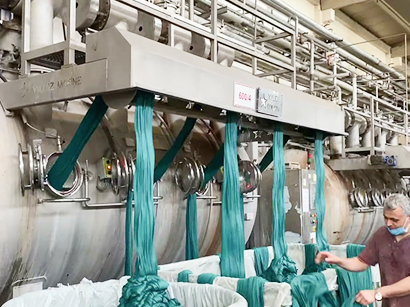
Dyeing is the process of applying color to textiles such as fabric, yarn, or fibers to achieve a desired shade or pattern. It is one of the most important finishing processes in the textile industry and can be done using natural or synthetic dyes.
How it’s Done:
- Preparation: The fabric or yarn is cleaned and treated to ensure even absorption of color.
- Dye Selection: Natural or chemical dyes are chosen based on the material and desired effect.
- Application: Color is applied through immersion, printing, or spraying techniques.
- Fixation: Heat, steam, or chemicals are used to fix the dye so it bonds permanently with the fabric.
- Finishing: The dyed fabric is washed, dried, and finished for use.
Applications:
- Apparel: Fashion clothing, uniforms, denim washes
- Home Textiles: Curtains, bed sheets, carpets
- Accessories: Scarves, handbags, footwear
- Industrial Uses: Technical textiles, safety gear, camouflage fabrics
Types of Dyeing:
- Piece Dyeing: Fabric is dyed after being woven or knitted
- Yarn Dyeing: Yarn is dyed before weaving or knitting, allowing for patterned designs
- Fiber Dyeing: Fibers are dyed before being spun into yarn
- Garment Dyeing: Finished garments are dyed for trendy looks and fast production cycles
- Tie and Dye or Batik: Artistic and traditional dyeing methods for unique patterns
Benefits of Dyeing Service:
Enhanced Aesthetics: Adds beauty, uniqueness, and value to textiles
Wide Color Range: Ability to achieve vibrant and subtle shades
Customization: Colors can be matched to specific branding or fashion trends
Versatility: Suitable for different materials such as cotton, polyester, silk, or wool
